
Merced City Directory Collections
Merced County Historical Society records at the Courthouse Museum provide the strongest local directory spine. The archive lists a Merced County Business Directory for 1877 and 1884-1885, Polk's California State Gazetteer for 1890, Polk's Merced City Directory for 1914, 1928-1929, 1930-1931, 1935, 1938, 1941, 1963, and 1966, plus Polk's Merced-Atwater Directory for 1971, 1972, 1980, 1988, and 1989. These are selected holdings, not a claim that every year was printed or preserved.
| Collection | Years | Where held | Access |
|---|---|---|---|
| Merced County Business Directory | 1877; 1884-1885 | Courthouse Museum archive | Archive inquiry or on-site use |
| Polk California State Gazetteer | 1890 | Courthouse Museum | Regional business and resident clues |
| Polk Merced City Directory | 1914; 1928-1929; 1930-1931; 1935; 1938; 1941; 1963; 1966 | Courthouse Museum | Name and address research |
| Polk Merced-Atwater Directory | 1971; 1972; 1980; 1988; 1989 | Courthouse Museum | Later household and address research |
| Merced-Madera directory microfilm | 1914; 1917; 1920; 1922; 1926-1931; 1935 | National Archives research facilities | Microfilm research |
| Federal census schedules | 1850-1950 public; 1960 due 2032 | NARA, FamilySearch, and library databases | Household and relationship context |
| Sanborn map collection | Merced sheets and years to verify | Library of Congress and library access | Building and street context |
| Newspapers, obituaries, and cemetery files | Custodian-specific | Main Library, Museum, and local archives | Microfilm, databases, or inquiry |
The Museum and NARA sets overlap in some years but are not identical. The Museum list is the better starting point for the named Polk runs and local archive material. NARA adds Merced-Madera reels that include Atwater, Chowchilla, and Livingston. A missing name may reflect a title's geographic boundary, an uneven canvass, a move, a death, or a publication gap. Write down the title page and catalog wording before comparing an entry across volumes.
Note: The Museum and NARA catalogs overlap in 1914 but list different holdings, so check both before calling a year missing.
The Merced County Historical Society archive inventory is the source for the local year list and the Museum's wider manuscript, photograph, map, cemetery, and newspaper material.
Merced Directory Years Do Not Match
The two catalog trails tell different stories about Merced directory history. The Museum's sequence runs from the 1877 business volume through selected Polk city issues and late Merced-Atwater volumes in 1989. NARA's Merced-Madera listing adds 1917, 1920, and 1922, then fills the 1926-1931 span and 1935. Neither list should be compressed into a smooth 1877-1989 run.
Geography is part of the evidence. A Merced-Madera title may include Atwater, Chowchilla, and Livingston, while a Merced-Atwater title names a different publication area. A household absent from a Merced page can appear under another town or rural route in the same reel. Record the publication title, not just the year, and inspect the coverage statement before deciding that a family left Merced.
Catalog check. Different year lists are a useful clue, not a defect. Use the Museum and NARA descriptions together, then retain the title page with each citation.
Merced Historical Directory Access
Access is split between a local archive, a public library, and national microfilm facilities. The Courthouse Museum archive handles the documented Polk and business-directory holdings. It also keeps photographs, maps, manuscripts, cemetery material, and newspaper files that can explain a changed street, business, or family connection. An archive inquiry should name the person or address, the likely year, and the kind of item sought.
The Merced County Library Main Branch is the practical research stop for licensed genealogy databases, newspaper databases, local microfilm, and library-held reference material. Ask whether a particular database requires a library card or in-building use. Remote vendor access depends on the library's current rules. NARA facilities are the fallback for the Merced-Madera microfilm run. Archive access does not mean every item is digitized, and research access does not automatically grant permission to republish a photograph.
Courthouse Museum archive
Polk and business-directory holdings, manuscripts, maps, photographs, newspapers, and cemetery material.
Use an archive inquiry or arrange on-site research. Ask about rights and duplication.
Merced County Main Library
Local microfilm, genealogy databases, newspapers, yearbooks, and reference help may fill gaps.
Confirm card, vendor, and in-building access rules before relying on a remote search.
National Archives facilities
Merced-Madera city-directory microfilm adds years not shown in the Museum list.
Use the NARA catalog wording and title geography when ordering or planning research.
The Merced City Clerk records page is a separate route for historical city-business records. It is not a replacement for county deeds, vital records, or the Museum's directory shelf.
Merced City Directory NARA Reels
The NARA city-directory listing identifies Merced-Madera holdings for 1914, 1917, 1920, 1922, 1926-1931, and 1935. The reel description includes Atwater, Chowchilla, and Livingston. That broader coverage matters when a Merced surname disappears from a city-only search or when a family lived near a changing county line.
Use the reel as a supplement to the Museum's local holdings. NARA's list is a holdings description, not proof that every page is online. At a research facility, note the reel title, publication area, volume year, and page or frame reference. A directory entry still needs a second source when a name is common or the address has changed.
The NARA holdings page shows the listing that anchors the additional year run.
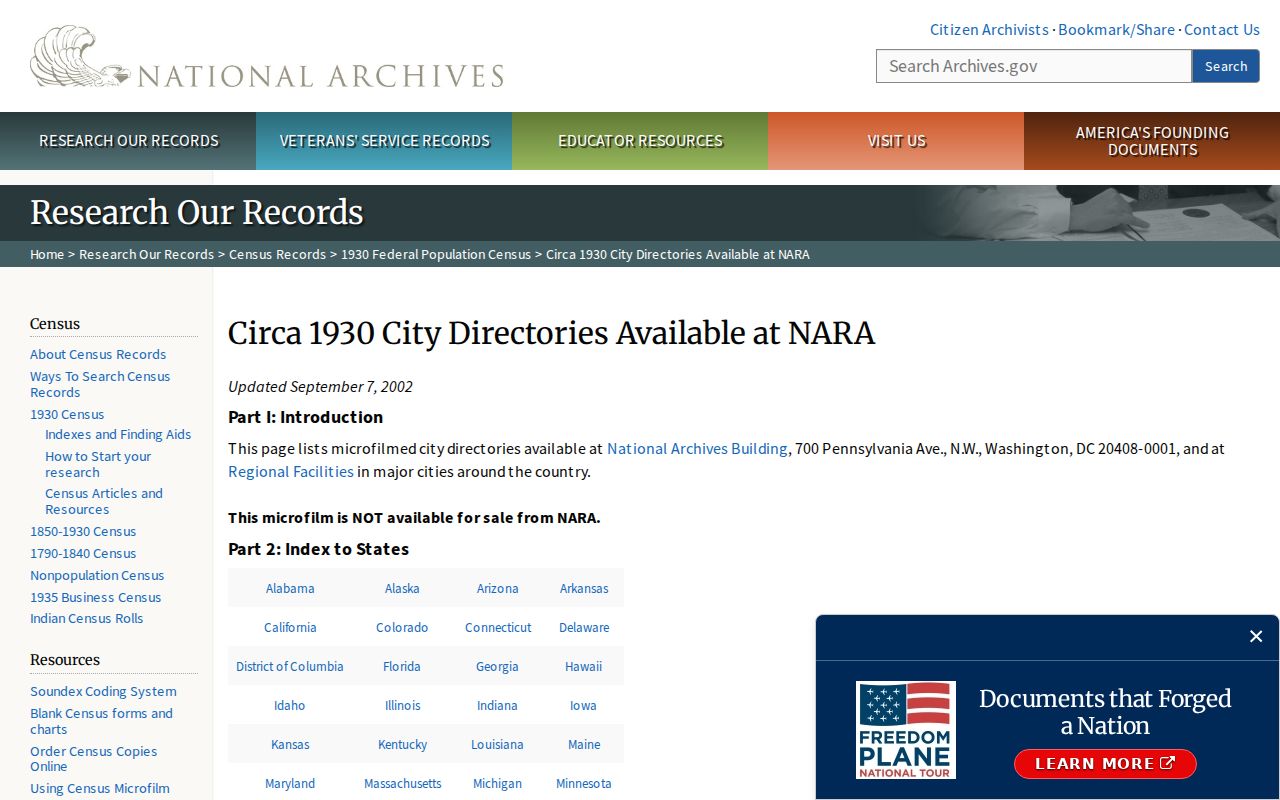
Use the title geography beside the target name. Merced-Madera is a publication label, not a promise that every listed household lived inside the present incorporated city.
Reading Merced Directory Volumes
A Polk-style Merced city directory normally starts with an alphabetical name section. The documented field pattern may include a surname, given name or initial, spouse in parentheses, a historical occupation label, and a residential street address. Some volumes also include a street-order reverse or criss-cross section. The archive did not locate an official open scan of a Merced alphabetical page, so the printed abbreviation key controls every interpretation.
| Name line | Surname, given name or initial, and sometimes a spouse in parentheses. |
|---|---|
| Occupation field | A historical occupation or business affiliation that can help separate people with the same name. |
| Address line | House number and street, with a separate business address in some entries. |
| Household mark | Marks such as r for resides or h for householder/home may appear; the volume legend controls. |
| Widow notation | A form such as wid Charles can connect a later entry to an earlier household. |
| Owner or occupant clue | A volume may distinguish a householder from someone recorded at the address; do not assign title from a symbol alone. |
- Criss-cross directory
- An address-order section that turns a street or house number into a historical occupant clue when the volume includes one.
- Householder index
- A name or address aid that points to the main household entry; the exact arrangement varies by volume.
- Abbreviation key
- The volume's own legend for marks and short forms. Copy it before quoting an entry.
Do not treat an omitted name as proof that a person left Merced. A move, death, marriage or name change, canvass omission, or publication boundary can produce the same gap. Compare the address, spouse, occupation label, and nearby entries before choosing among those explanations.
Merced Directory Geography
Publication geography changes the meaning of a hit. The Museum's Merced-Atwater issues cover a named regional area, while NARA's Merced-Madera reels explicitly include several surrounding communities. A name that looks absent from a Merced city directory may sit under Atwater, Livingston, Chowchilla, or a rural route in the same historical record set.
Write down the city or community printed beside the address. Compare street names, household members, and business references only after confirming the title's coverage. This is especially important for families near the edge of the city or for households that moved between a central grid and a county route. A city directory is a publication snapshot, not a modern boundary map.
Sanborn maps and city maps can help explain a changed street or building footprint, but the exact Merced sheet years were not verified in the research. Use the Library of Congress Sanborn collection as a catalog and map-access starting point, then check the local library or Museum for related material.
Pair Merced Volumes With Census
Directory years sit between federal census releases. Public census schedules currently reach through 1950 under the 72-year rule, while 1960 schedules are expected in 2032. A directory can supply an address in a year the census did not enumerate, and the census can add relationship, age, birthplace, and immigration or naturalization detail that the directory lacks.
- Start with the closest known Merced directory year and copy the entry, address, spouse notation, and abbreviation key.
- Search one directory year before and after the target to test continuity, spelling, and movement.
- Pair the result with the nearest released census schedule, especially 1920, 1930, 1940, or 1950.
- Compare household relationships and ages, then check newspapers, obituaries, cemetery files, or a deed when the story changes.
- Record the directory title geography so a Merced-Madera or Merced-Atwater hit is not mistaken for a city-only entry.
The Census QuickFacts record for Merced supplies current population and tenure context, but it is not a household directory or a substitute for historical schedules.
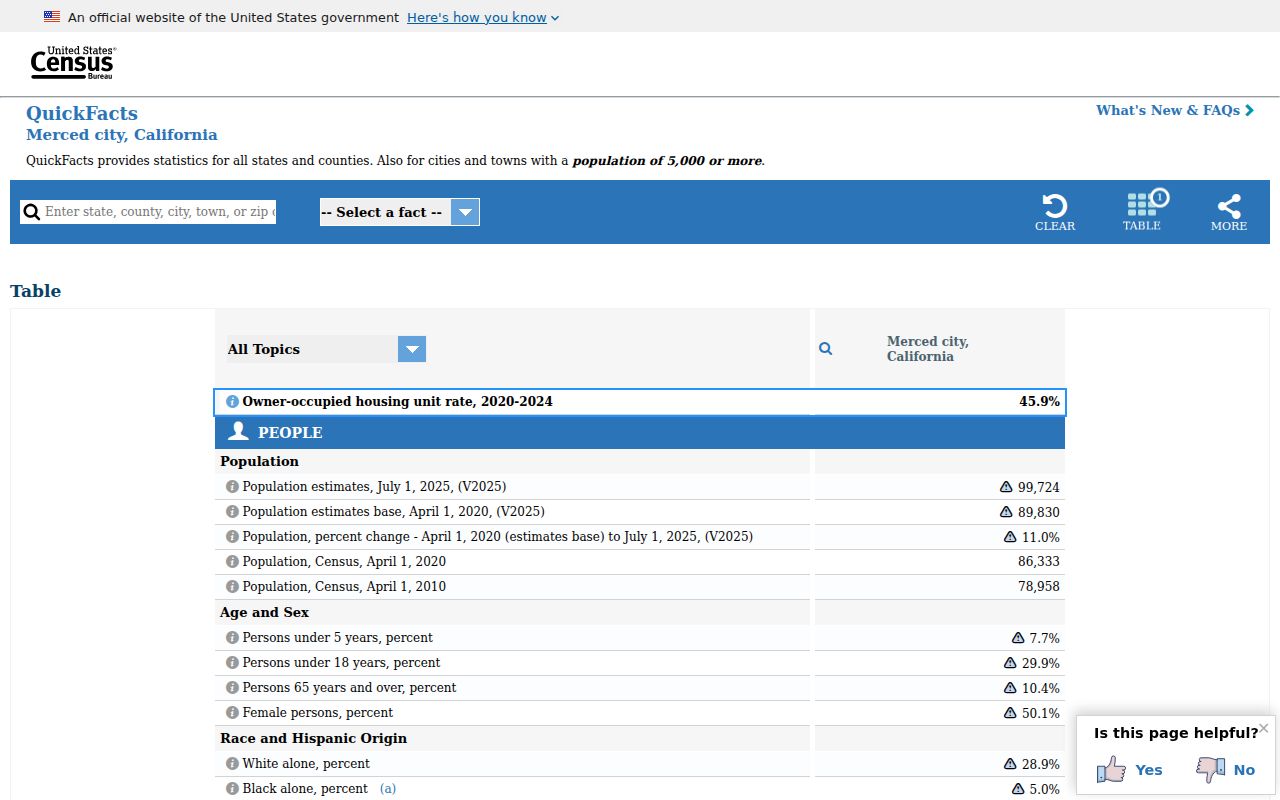
Use current statistical context only to understand the limits of ownership records. Historical identity work still rests on the named directory, census schedule, and supporting source for the person being traced.
Merced Directory Clues Beyond Polk
Directory work improves when a second local collection answers the question left open by an entry. The Museum's manuscripts, photographs, maps, newspaper clippings, cemetery files, and obituary material can explain a changed business or a family's departure. Main Library microfilm and licensed genealogy databases can supply a newspaper notice or another directory edition. Ask for a surname, address, year, and record type rather than a broad request for every mention.
Yearbooks from Merced College or local school and district archives can reconnect classmates, but student education records remain protected. UC Merced's faculty and staff directories identify institutional affiliation and official contact, not private addresses. Church registers, cemetery records, funeral-home notices, and donated fraternal or veteran collections are custodian-specific. A published historical item can be useful evidence; a private roster is not a public household list.
Use the legend first. Copy the abbreviation and street-section pages with the target entry so later readers can tell residence, household status, and spouse notation apart.
Trace Families Through Merced Volumes
Start with a known person and year, then build a small sequence instead of relying on one attractive match. Follow the name forward and backward, note every address, and treat spouse, widow, occupation, and nearby household entries as separate identity anchors. If a street address stays while the surname changes, check an obituary, probate file, deed, or marriage index before deciding that the household is the same.
| 1877 and 1884-1885 | Merced County business-directory clues at the Courthouse Museum. |
|---|---|
| 1890 | Polk California State Gazetteer, a regional clue set. |
| 1914 through 1941 | Selected Polk Merced City Directory issues, supplemented by NARA years. |
| 1963 and 1966 | Later Polk Merced City Directory snapshots before the Merced-Atwater issues. |
| 1971 through 1989 | Selected Polk Merced-Atwater issues for later household and address research. |
When a historical directory clue needs a current address-keyed confirmation, the Merced street directory by address follows the modern parcel and deed record chain. When the question shifts from a household sequence to one person, the Merced resident lookup can point to the appropriate current record custodian. Those current tools answer a different question than the historical shelf.
From Merced Directory Occupant to Owner
A city directory identifies a person at a publication-year address. A recorded deed identifies parties to a transaction and a legal description. The two records can describe the same household, but neither one replaces the other. Use the directory for an occupant or family clue, then verify title history in the county's recorded-document index or at the Recorder counter.
RecorderWorks provides the county's online grantor-grantee index from January 1, 1963 forward. Earlier official records require in-person research at the Merced County Assessor-Clerk-Recorder. The handoff is strongest when the directory entry supplies a full name and address and the deed supplies an APN or legal description. Keep the volume title, page, and source date with every conclusion.
Merced's directory trail begins earlier than its online deed doorway. That gap is not a reason to discard a family-history lead. It is a prompt to move from a local directory or census entry to the Museum, NARA, library, Recorder counter, or another named custodian.